
Who I'm Following - November 2026


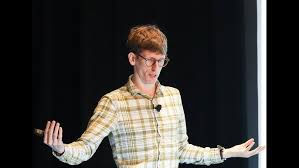
This month I'm going off-script with an actor. I even have a tiny personal connection: when I was at IMAX, The Walk, Robert Zemeckis's film about Philippe Petit's walk between the Twin Towers, got its IMAX 3D release, and Joseph Gordon-Levitt played Petit. “JoGo” is one of the brainiest people in Hollywood, and these days he's pointing that brain at AI.
In March, the UN named him its first Global Advocate for Human-centric Digital Governance, a new role working with its Internet Governance Forum. The job is to translate dense digital policy into something the public can follow. In July, he sent a message to the UN's Global Dialogue on AI Governance in Geneva. In September, around the UN General Assembly, he talked about what AI is doing to children's attention and relationships. He also co-founded the Creators Coalition on AI, which is pushing for transparency and fair practices in how AI uses creative work. (It's not anti-AI, he's careful to say.)
Here's why I'm following him:
He's an optimist who wants rules. His Geneva argument is that a world without governance doesn't free anyone. It hands the advantage to the already rich and powerful. He believes AI can do real good for the economy, education and creativity, but whether it does depends on governance. Sounds like a fellow AI Pragmatist to me.
He refuses the doom sound bite. In a recent New York Times video, he pushed back on the “AI will exterminate us” framing. He doesn't call it baseless, but he thinks it distracts from the duller, denser worries: concentrated economic power and the erosion of democracy and empathy. His sharpest line for our world is that models are “trained to hijack your intimacy.” Those of us who live in behavioral data know exactly how engagement gets optimized.
He sends you to other people. He opens that interview by telling viewers not to listen to an actor, and to read Stuart Russell and Yoshua Bengio instead. A thought leader who points you to other thought leaders is rare!
His real job is translation: taking something complicated and making people care enough to act. That's our job too. (And it's a nice pairing with this month's read. An Artificial Friend is exactly the kind of thing he's worried about being built at scale.)
Who's the most unlikely voice shaping how you think about AI right now?


Comments